

How to Fix a Sagging Fence Gate: Causes, Solutions, and Prevention Guide
Few things around your home are quite as frustrating as a fence gate that refuses to swing open or latch properly. You walk outside to let the dog into the yard or carry a lawnmower through, only to find the corner of the gate dragging across the grass, scraping the dirt, or striking the latch post several inches too low.
Your gate is the only moving part of your entire fence boundary. While horizontal rails and stationary pickets stay anchored in place, a gate experiences continuous rotational stress, wind vibration, and daily impact every time it swings open and shuts. Over time, that constant physical strain causes components to shift out of square.
In this comprehensive guide, we will break down what causes a fence gate to sag, examine practical repair solutions, detail how to keep wood and vinyl gates permanently aligned, and explain when to call for professional gate repair or replacement.
What Causes a Fence Gate to Sag?
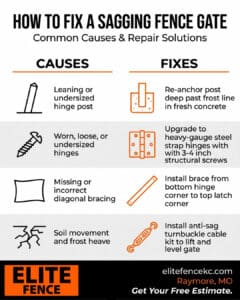
A sagging gate is rarely caused by a single isolated screw. Instead, it is usually the result of shifting leverage points between the swinging frame and the underground anchor post. Here are the four primary reasons a fence gate begins to sag.
1. Leaning or Under-Engineered Hinge Posts
A gate post carries an immense amount of cantilevered weight. Every time the gate swings open, the full weight of the frame and pickets pull horizontally against the top of the hinge post.
If the original contractor did not set the post deep past the local frost line, poured too little concrete, or used an undersized post, the post will slowly lean toward the latch side. Even a quarter-inch lean at ground level translates to two or three inches of sag at the far latch corner.
2. Loose, Worn, or Undersized Hinges
Gate hinges bear the entire rotational load of the gate. If a gate was installed with light-duty utility hinges rather than commercial-grade hardware, the metal can bend under continuous strain.
Outdoor wood also contracts and expands with seasonal moisture changes. This natural movement loosens mounting screws, creating play inside the hinge plate and causing the far side of the gate to drop toward the ground.
3. Frame Racking and Missing Diagonal Bracing
A standard gate is built as a square or rectangle. Without proper structural reinforcement, gravity naturally pulls the heavy, unsupported outer corner downward, warping the rectangular frame into a leaning parallelogram. This mechanical distortion is known as racking.
If your gate lacks a structural diagonal brace, or if the diagonal support was installed in the wrong direction, the frame cannot resist gravity and will sag under its own weight within a few seasons.
4. Soil Movement and Frost Heave
In our Midwest climate, seasonal weather fluctuations put enormous pressure on underground foundations. During winter cold snaps, moisture inside the top layer of soil freezes and expands.
If the hinge post footer was installed too shallow, this ground expansion pushes the post upward and outward, an effect known as frost heave. When the ground thaws in the spring, the post settles unevenly, leaving the gate misaligned and dragging on the turf.
How to Fix a Sagging Fence Gate: Practical Step-by-Step Solutions
Depending on whether your sag stems from loose hardware, a warped frame, or a shifting post, several proven repair techniques can bring your gate back into alignment.
Tighten or Upgrade the Hinge Hardware
Before attempting major structural modifications, inspect the hinge hardware attached to both the gate frame and the support post.
If the mounting screws are loose or stripped, remove them one at a time. Drill out worn screw holes, fill them with exterior wood glue and wooden dowels, and drive fresh, heavy-duty structural screws at least three to four inches long into the center of the post. If the hinges themselves are warped or bent, replace them with heavy-gauge, powder-coated steel strap hinges that distribute weight across a wider surface area.
Install an Anti-Sag Cable Turnbuckle Kit
One of the fastest, most effective ways to lift a sagging gate corner is installing a metal anti-sag cable kit.
This assembly consists of a threaded steel turnbuckle, coated steel aircraft cable, and corner mounting brackets. Mount the top bracket on the upper hinge-side corner and the bottom bracket on the lower latch-side corner. Thread the cable through both brackets and connect it to the turnbuckle in the middle. As you turn the turnbuckle with a wrench, the cable shortens under tension, pulling the dragging latch corner upward until the frame sits perfectly level.
Re-Anchor or Straighten the Hinge Post
If the gate frame is square but the entire hinge post is leaning, fixing the gate requires resetting the foundation.
To straighten a leaning post, you must remove the gate to eliminate weight. Dig out the soil around the perimeter of the existing concrete collar, pull the post back into a plumb, vertical position using a transit or four-foot carpenter level, and brace it with temporary two-by-fours. Once aligned, pack the void with fresh, fast-setting concrete and allow it to cure fully before hanging the gate back in place.
How to Keep a Wood Fence Gate from Sagging
Wood gates are naturally heavy, making proper framing and diagonal engineering essential to prevent future sagging. When constructing or reinforcing a wood boundary gate, incorporate these structural safeguards:
Install Diagonal Bracing in the Correct Direction
The single most common mistake on wood gates is installing the diagonal wood brace backward. A wooden brace works under compression, meaning it pushes weight from an unsupported corner down into a solid anchor point.
To keep a wood gate from sagging, the diagonal wood brace must run from the bottom corner on the hinge side upward to the top corner on the latch side. In this arrangement, the weight of the outer gate pushes downward along the angle of the wood beam, transferring the load directly into the bottom hinge and post. If the brace runs from the top hinge to the bottom latch, it is placed in tension, causing the fasteners to pull loose over time.
Use Heavy-Duty Corner Brackets and Quality Fasteners
Standard nails cannot handle the rotational torque of a swinging wood gate. Always build the gate frame using three-inch exterior-grade structural screws and reinforce all four interior corners with powder-coated steel ninety-degree corner brackets. These metal brackets lock the corners at rigid right angles and prevent the frame from racking.
Build with Kiln-Dried or Seasoned Lumber
Pressure-treated pine lumber is often saturated with liquid chemical preservatives when purchased from lumber yards, making individual boards exceptionally heavy.
Constructing a gate from wet lumber places unnecessary weight on the hinge post. In addition, as the lumber bakes in the summer sun, boards dry unevenly, leading to twisted rails and severe frame warping. Building your gate frame with Western Red Cedar or thoroughly seasoned, kiln-dried lumber keeps the overall gate weight low and ensures dimensional stability.
Add a Supporting Gate Caster for Extra-Wide Openings
If your property features a wide pedestrian walk gate or a four-foot utility access gate, the sheer leverage of the lumber can strain even properly braced posts. Installing an adjustable, spring-loaded gate caster wheel under the outer latch-side corner transfers the physical weight of the gate directly onto the ground, eliminating cantilevered strain on the hinge post.
How to Keep a Vinyl Fence Gate from Sagging
Vinyl fencing provides clean curb appeal and zero painting chores, but PVC is a flexible polymer that lacks the natural structural stiffness of wood. Because vinyl expands and flexes under summer heat, preventing a vinyl gate from sagging requires specialized internal reinforcement:
Insert Steel Post Stiffeners
A hollow five-by-five vinyl post cannot support the weight of a swinging gate on its own. Over time, the weight of the gate will cause the plastic post wall to bow, pulling the gate toward the ground.
To prevent sagging, professional contractors insert galvanized steel post stiffener inside the hollow vinyl hinge post before pouring concrete. The hinge mounting screws thread directly through the vinyl and bite into the internal metal core, creating an unbreakable anchor point that remains rigid in all seasons.
Utilize Internal Welded Metal Gate Frames
High-quality vinyl gates do not rely on vinyl rails alone to hold their shape. Instead, they feature an internal welded aluminum or galvanized steel skeleton hidden inside the vinyl pickets and perimeter channels.
This rigid metal box frame completely prevents racking and ensures the gate remains square, even when exposed to high winds and intense solar heat. If your vinyl gate lacks an internal frame, adding an external anti-sag turnbuckle kit designed for vinyl gates will provide the necessary tension to keep it level.
Ensure Proper Drop Rod and Latch Alignment
Double-drive vinyl gates used for lawnmower or trailer access must be secured firmly when closed. If gates are left to swing or vibrate in the wind, the latches wear out quickly and the center drops.
Always install a heavy-duty stainless steel drop rod on the inactive gate leaf, seating it deeply into a metal ground sleeve. This locks the center of the opening firmly in place, allowing the active gate leaf to latch securely without sagging.
Build a Sturdy, Smooth-Swinging Fence with Elite Fence
At Elite Fence, we are a family-owned company based right here in Raymore, MO. Our experienced crews build and install custom wood, vinyl, ornamental metal, and chain link boundaries engineered for long-term durability. We set structural hinge posts deep past the local frost line in heavy concrete footings, use internal metal post stiffeners on all vinyl gates, and incorporate heavy-duty commercial hardware so your gate swings effortlessly for decades.
Ready to see how a durable new fence fits your home improvement budget? Use our Free Fence Estimator Tool on our website to virtually map your yard boundary and receive an instant estimate in minutes! Whether you need a secure, custom-built fence in Lee’s Summit, are planning a full yard replacement in Overland Park, or want to upgrade your perimeter in Belton, our local team is ready to bring your vision to life.
Contact Elite Fence today to schedule your fence consultation and enjoy a solid, smooth-swinging gate built to last!
Frequently Asked Questions
Which direction should a diagonal wood brace run on a gate?
A diagonal wood brace should always run from the bottom corner on the hinge side upward to the top corner on the latch side. This orientation places the wood in compression, allowing the angled beam to act as a solid strut that transfers the downward weight of the outer gate directly into the lower hinge post.
Can you fix a sagging gate without replacing the post?
Yes, as long as the hinge post itself is straight, plumb, and firmly anchored in the ground. If the post is solid, you can fix gate sag by tightening or upgrading the hinges, installing an anti-sag turnbuckle cable kit, or rebuilding the gate frame with proper diagonal cross-bracing.
Why is my vinyl fence gate dragging on the ground?
A vinyl gate drags when the hollow hinge post lacks an internal metal stiffener, causing the plastic to bend outward under the gate weight. It can also occur if the hinges have loosened from the post wall or if the gate was built without an internal welded aluminum frame, allowing the PVC rails to sag in warm weather.
Is an anti-sag gate kit permanent?
An anti-sag turnbuckle kit is a long-lasting, highly effective solution. Because the cable utilizes an adjustable threaded turnbuckle, you can easily retighten the assembly over the years if natural ground settling or wood shrinkage causes the corner to drop slightly again.