

Fence Replacement Cost: Pricing Guide, Material Breakdown, and Cost Factors
When a residential fence begins to lean, rot, or collapse after decades of exposure to Midwest weather, replacing it is essential to restore safety, containment, and curb appeal. However, budgeting for a fence replacement involves a few distinct costs that do not apply to a brand-new installation on empty ground.
A fence replacement project includes taking down the old panels, digging out stubborn concrete footings, disposing of heavy debris, and installing a new boundary engineered to modern structural standards. In this guide, we will break down what it costs to replace a fence, examine pricing across four major fencing materials, and highlight the key factors that influence your total investment.
What is the Cost to Replace a Fence?
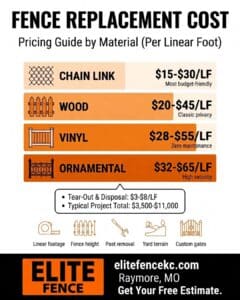
On average, the total cost to replace a residential fence ranges from $20 to $65 per linear foot, with most complete backyard projects landing between $3,500 and $11,000. For a standard residential yard requiring approximately 150 to 200 linear feet of boundary fencing, final pricing depends heavily on the material you select and the difficulty of removing the old structure.
A complete fence replacement generally consists of two primary billing phases:
- Tear-Out and Old Fence Disposal: Removing old pickets, horizontal rails, and concrete-encased post footers typically costs between $3 and $8 per linear foot. If old posts are set exceptionally deep or buried under overgrown tree roots, post extraction can sit toward the higher end of that range.
- New Boundary Installation: Sourcing materials, digging post holes below the frost line, pouring fresh concrete footings, and building the new structure accounts for the remaining $17 to $57 per linear foot, depending on whether you choose economical chain link or premium ornamental metal.
Because removal labor is relatively consistent across most yard layouts, the material you choose for your new fence serves as the biggest variable in your total replacement budget.
Fence Replacement Cost by Fence Type
Different materials require different manufacturing processes, raw materials, and assembly labor. Here is how replacement costs compare across the four most common residential fencing types.
Wood Fence Replacement Cost
Wood fencing remains a traditional favorite for privacy and warmth. A complete wood fence replacement typically ranges from $20 to $45 per linear foot, including tear-out of the old fence and full installation of the new boundary. For a standard 150-foot backyard perimeter, homeowners generally spend between $3,000 and $6,750.
Your choice of lumber plays a significant role in where your project falls within that spectrum. Pressure-treated pine is the most economical lumber choice, providing budget-friendly upfront pricing. Western Red Cedar costs twenty to thirty-five percent more than pine, but its natural tannins offer superior protection against insect damage, cupping, and warping in our regional climate.
Vinyl Fence Replacement Cost
Vinyl fencing is a premier low-maintenance boundary that never rots, splinters, or requires ongoing coats of stain. Replacing an old fence with a new vinyl privacy boundary typically costs between $28 and $55 per linear foot for tear-out and installation. A complete replacement across a 150 to 200 linear foot yard generally ranges between $4,500 and $10,500.
While vinyl carries a higher initial investment than wood or chain link, it delivers outstanding long-term value. Interlocking tongue-and-groove PVC panels resist moisture entirely, making vinyl an exceptional thirty to forty year investment that eliminates future painting and board replacement costs.
Chain Link Fence Replacement Cost
Chain link is the most cost-effective residential boundary material available. Replacing an old fence with a new chain link fence generally costs between $15 and $30 per linear foot, including the removal of your existing fence. A standard 150-foot perimeter replacement typically totals between $2,250 and $4,500.
Traditional galvanized steel mesh sits at the lowest end of the price spectrum and provides dependable pet containment and boundary demarcation. Upgrading to a black vinyl-coated chain link system adds a modest initial material charge, but the sleek protective coating shields the steel wire from moisture while blending into natural backyard landscaping.
Ornamental Fence Replacement Cost
Ornamental fences, manufactured from powder-coated aluminum or galvanized steel, provide high security and architectural elegance. Replacing an aging boundary with an ornamental metal fence typically ranges from $32 to $65 per linear foot for complete demolition and new installation. Total replacement projects for a standard yard commonly range from $5,000 to $12,500.
Ornamental aluminum is naturally rust-proof and ideal for properties enclosing in-ground swimming pools or outlining formal front landscapes. Welded ornamental steel delivers unmatched physical strength and impact resistance, making it an exceptional high-security perimeter for open properties.
Factors That Influence Fence Replacement Cost
While material choice sets the baseline, several unique property characteristics and project details directly influence your final replacement estimate.
Total Linear Footage and Perimeter Layout
Total perimeter length is the primary driver of material volume and installation labor. Fence contractors price base estimates using linear feet. While larger perimeters naturally cost more in total dollars, long continuous runs often have a slightly lower cost per linear foot due to bulk material delivery and streamlined crew setup on site.
Post Removal Difficulty and Root Obstacles
Dismantling old fence panels is quick, but extracting dozens of concrete post footers buried deep in the ground is physically demanding. If previous posts were set in oversized concrete collars, or if heavy tree roots have grown around the underground footings, extracting the old foundation requires heavy hydraulic pullers and extra labor hours.
Boundary Height and Panel Style
The height and styling of your fence dictate the volume of raw materials required. Stepping up from a standard 6-foot privacy fence to an 8-foot privacy fence increases material costs by twenty to thirty percent because it requires longer structural posts, heavier support rails, and extra pickets. Complex picket arrangements, such as board-on-board wood styling that overlaps pickets for complete privacy, also require more raw lumber than basic stockade designs.
Yard Slopes, Terrain, and Soil Conditions
The physical grading of your property affects construction speed. Flat lots with soft soil allow post augers to dig holes quickly and cleanly. In contrast, yards with steep hills require stepping or racking techniques to prevent large gaps underneath the panels. Furthermore, rocky soil, dense clay, or underground obstacles slow down post hole drilling and require heavy machinery.
Number, Width, and Style of Custom Gates
Every gate installed along your perimeter requires specialized hinge posts, reinforced structural framing, anti-sag hardware, and latching mechanisms. Adding wide double-drive gates for boat storage or riding mowers requires heavier hardware and extra framing time compared to a standard 4-foot pedestrian walk gate.
Additional Replacement Expenses to Keep in Mind
Beyond the basic tear-out and installation bid, a few secondary project details should be included in your home improvement budget.
Post-Installation Staining for Wood Boundaries
If you select a wood fence replacement, applying a professional oil-based stain or water-repellent sealer protects the natural fibers from ultraviolet sun bleaching and rainwater absorption. Staining immediately after seasoning protects your investment and typically adds $3 to $5 per linear foot.
Surveying Property Boundaries and Municipal Permits
If existing fence lines appear misaligned or boundary pins are missing, hiring a licensed surveyor prevents property disputes with neighbors. In addition, many local municipalities require residential building permits and plan reviews before construction begins, which usually involve modest municipal filing fees.
Plan Your Fence Replacement with Elite Fence
Replacing an old, deteriorating fence is an investment that restores structural security, protects pets, and enhances your home’s curb appeal. When you are ready to replace a failing boundary, partnering with an experienced local contractor ensures your new structure is built on a solid foundation.
At Elite Fence, we are a family-owned company based right here in Raymore, MO. We specialize in complete fence replacements, handling everything from tearing out old wood and digging out old concrete to setting new posts deep below the local frost line. We use commercial-grade fasteners, premium materials, and proven installation techniques to ensure your replacement stands straight and strong for decades.
Ready to see how a new boundary fits your project budget? Use our Free Fence Estimator Tool on our website to virtually draw your yard layout and receive an instant replacement estimate in minutes! Whether you need a full fence replacement in Independence, want to upgrade your yard boundary in Lake Winnebago, or are planning an installation in Mission Hills, our experienced team is ready to bring your project to life.
Contact Elite Fence today to schedule your replacement consultation and build a boundary made to last!
Frequently Asked Questions
Does the cost of a fence replacement include hauling away the old fence?
A complete turnkey estimate from a reputable contractor should explicitly itemize tear-out, post extraction, and debris haul-away fees alongside new material and labor costs. Always verify that disposal fees are included so you are not left with piles of rotted lumber or broken concrete in your yard.
Is it cheaper to repair a fence or replace it completely?
If less than 20 percent of your fence is damaged and the underground posts remain straight and sturdy, repairing individual pickets or rails is cheaper. However, if multiple posts are leaning, wood rot is widespread, or cumulative repair quotes exceed half the cost of a new structure, replacing the fence is more cost-effective because it prevents ongoing repair bills on an aging frame.
How long does a full fence replacement typically take?
For a standard residential yard measuring 150 to 200 linear feet, a full replacement usually takes two to four working days. Day one typically covers tear-out, debris haul-away, and post hole digging. Subsequent days involve pouring concrete footings, allowing footers to cure, and assembling the rails, pickets, or panels.