
Composite vs. Vinyl Fence: Material, Cost, and Durability Comparison
When homeowners decide to upgrade their backyard boundary, escaping the endless cycle of staining, painting, and replacing rotted wood is often top of mind. In recent years, modern synthetic materials have revolutionized residential fencing, offering decades of privacy and security with minimal upkeep.
Two popular materials frequently surface in the low-maintenance fencing conversation: composite and vinyl. Both options eliminate the primary headaches of natural lumber, but they differ significantly in cost, daily maintenance, and overall value. While composite brings an engineered wood look to the table, vinyl has become the go-to standard for homeowners who want maximum durability and effortless upkeep without paying a massive premium.
In this guide, we break down the key differences between composite and vinyl fencing to explain why vinyl remains the smarter, more practical long-term investment for your property.
Understanding Modern Low-Maintenance Fencing
Before comparing price tags and long-term performance, it is essential to understand how each material is engineered and manufactured.
What is Vinyl Fencing?
Vinyl fencing is manufactured from high-grade polyvinyl chloride, commonly referred to as PVC. During the manufacturing process, specialized additives such as titanium dioxide and impact modifiers are blended into the resin to protect the plastic from ultraviolet sun damage and prevent brittleness during winter freeze cycles.
Vinyl fence panels feature interlocking tongue-and-groove pickets that slide into sturdy horizontal rails and vertical posts. The final product is a non-porous, lightweight, and weather-resistant surface with clean lines and a smooth finish.
What is a Composite Fence?
A composite fence is an engineered building material made from a dense blend of recycled wood fibers, recycled plastics like polyethylene, and specialized bonding agents. By combining wood sawdust with thermoplastic resins, manufacturers create a material that mimics the organic look and texture of natural lumber while providing synthetic resistance to insect damage and ground decay.
Composite fence boards are solid, dense, and heavy. Many modern composite systems feature protective outer polymer caps, known as co-extruded capping, that shield the interior core from surface scratching, moisture absorption, and solar bleaching. However, blending organic wood particles with synthetic plastics results in a much heavier, more complex product that comes with a premium price tag.
Pros and Cons of Composite vs. Vinyl Fencing
To give you a quick, comprehensive snapshot before exploring costs and maintenance, here is how the advantages and trade-offs of each material stack up side by side.
Composite Fencing
- Pros: Delivers an authentic, natural wood appearance with realistic grain textures and deep earth tones. The solid, dense board profile provides superior sound dampening and acoustic privacy against neighborhood noise. Offers exceptional impact resistance against stray sporting balls or lawn equipment, will never rot or suffer insect decay, and uses eco-friendly recycled content.
- Cons: Substantially more expensive to purchase and install; heavy boards require specialized post systems and exact spacing for thermal movement; textured wood-grain surfaces trap pollen and dirt, requiring specialized cleaning; cannot be easily repaired if an individual board is damaged.
Vinyl Fencing
- Pros: Delivers top-tier durability and a 30 to 40 year lifespan at a fraction of composite’s cost; completely non-porous PVC never absorbs moisture or harbors internal rot; virtually effortless maintenance that requires only an occasional garden hose rinse; clean, polished curb appeal that never fades or peels.
- Cons: Hollow panel pickets are more vulnerable to puncture damage from high-speed lawnmower gravel strikes or heavy impact in sub-zero winter temperatures. The smooth, slightly reflective surface lacks the natural, organic warmth of real wood grain. Expanding interlocking panels cannot be painted or stained to update colors later on.
Cost Comparison: Why Vinyl Delivers Superior Value
When evaluating long-term home improvement projects, material and installation costs play a central role in decision-making.
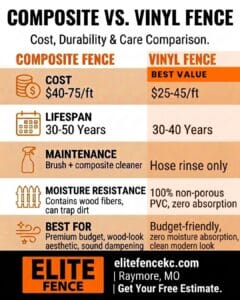
On average, vinyl fencing is the more budget-friendly option between the two premium synthetic materials. A professionally installed vinyl privacy fence generally ranges from twenty-five to forty-five dollars per linear foot for materials and labor. For a standard backyard boundary requiring approximately one hundred and fifty to two hundred linear feet, total project investments typically range between four thousand and nine thousand dollars.
Composite fencing sits at the upper end of the residential fencing price tier. Due to the high density of raw materials and complex co-extrusion manufacturing processes, composite fencing materials and installation typically range from forty to seventy-five dollars per linear foot. A complete composite backyard installation often requires an investment between seven thousand and fifteen thousand dollars.
Composite offers an attractive look, but you are paying almost double the upfront price for a product that delivers nearly identical longevity. High-grade vinyl gives you 30 to 40 years of reliable privacy, weather resistance, and low maintenance at a significantly more approachable price point. For the vast majority of homeowners, vinyl delivers far better overall value for every dollar invested.
Which Fence Offers Easier Maintenance?
Both materials drastically reduce weekend chores compared to natural wood, but they differ slightly in daily upkeep and long-term cleaning needs.
Routine Cleaning Requirements
Vinyl fencing is non-porous, meaning dirt, mold spores, and grass clippings cannot soak into the material. Keeping a vinyl fence clean usually requires nothing more than spraying it down with a garden hose and wiping occasional stubborn mud spots with warm water and mild dish soap.
Composite fencing is also low maintenance, but because it contains organic wood fibers, its textured surface can hold onto airborne pollen and dirt more readily than slick vinyl. While capped composite resists stains well, cleaning textured composite often requires a soft-bristle brush alongside a specialized composite cleaner or mild biodegradable soap.
Mold, Mildew, and Moisture Defense
In humid summer climates, north-facing fences or sections shaded by large trees can develop green algae or surface mildew.
On a vinyl fence, algae sits directly on the exterior and rinses away easily with a diluted vinegar solution or gentle vinyl wash. On composite fences, older uncapped boards could occasionally absorb moisture if left dirty for long periods. However, modern high-grade capped composite boards prevent water penetration, allowing surface mold to be washed away without damaging the inner wood fibers.
Scratch and Impact Resistance
Vinyl is flexible and durable, but sharp impacts from rocks thrown by lawnmowers or aggressive weed eaters can cause puncture cracks in hollow pickets. Repairing damaged vinyl usually requires taking apart the top rail to swap out the broken panel.
Composite fencing is solid and dense throughout each board, making it exceptionally resilient against impact damage from stray baseballs or equipment strikes. Minor surface scuffs on composite blend in naturally with the wood grain texture, whereas scratches on shiny vinyl panels can be more noticeable up close.
Is Composite Fencing Better Than Vinyl?
Composite is a solid, attractive material for homeowners who have an unlimited budget and prioritize the visual look of textured wood above all else. However, when you factor in real-world performance, daily upkeep, and overall project cost, vinyl is the clear winner.
Vinyl delivers:
- Comparable 30 to 40 year longevity
- Superior moisture resistance with zero wood fibers
- Quicker, easier cleaning with a standard garden hose
- Thousands of dollars in upfront savings compared to composite
Structural Longevity and Midwest Durability
Our regional climate brings wide temperature swings, from humid ninety-degree summer days to sub-zero winter freezes and heavy thunderstorm wind gusts.
Thermal Expansion and Contraction
Both materials expand and contract with fluctuating outdoor temperatures. Quality vinyl panels are designed with interlocking loose-fit tongues that allow pickets to slide slightly inside horizontal rails without buckling. Composite boards expand along their length, requiring precise spacing gaps during installation to ensure boards do not push against one another when summer heat arrives.
Ultraviolet Sunlight and Color Fastness
Direct sun exposure can cause untreated plastics to fade. Premium vinyl fences use high concentrations of titanium dioxide to deflect UV rays, ensuring white and tan panels maintain their vibrant shade for decades. Modern capped composite uses advanced UV-inhibiting polymers to prevent the heavy color bleaching that plagued first-generation composite products, ensuring rich browns, grays, and charcoal tones stay consistent over time.
Build Your Low-Maintenance Vinyl Fence with Elite
When you are ready to invest in a low-maintenance privacy boundary, you want a material that lasts and a local team you can trust. Because vinyl consistently provides the best balance of long-term durability, low maintenance, and affordable pricing, it is our primary specialty for homeowners seeking synthetic privacy fences.
At Elite Fence, we are a family-owned company based right here in Raymore, MO. We specialize in installing high-grade vinyl privacy boundaries engineered to handle local wind loads and winter ground freezes.
Ready to see how a low-maintenance vinyl fence fits your project budget? Use our Free Fence Estimator Tool on our website to virtually map your yard and get an instant quote in minutes! Whether you are planning a modern fence installation in Lee’s Summit, upgrading your backyard in Loch Lloyd, or exploring new boundary styles in Belton, our experienced team is ready to bring your vision to life.
Contact Elite Fence today to schedule your consultation and build a boundary that stands the test of time!
Frequently Asked Questions
Does composite fencing fade over time?
Modern capped composite fencing experiences minimal fading. During the first two to three months of outdoor exposure, composite undergoes a slight natural weathering process, after which its UV-resistant outer cap locks in the color for decades.
Can you pressure wash vinyl and composite fences?
You can pressure wash both materials, but you must use caution. For vinyl, use a wide-angle spray tip and maintain a pressure setting below fifteen hundred pounds per square inch to avoid cracking the panels. For composite, keep pressure below twelve hundred pounds per square inch and spray along the grain from a distance of at least ten inches to prevent etching the surface cap.
How long do composite and vinyl fences last?
Both materials offer incredible longevity. A quality vinyl fence typically lasts thirty to forty years, while a high-grade capped composite fence can last thirty to fifty years without rotting, decaying, or succumbing to insect infestations.